Likalong Paint
Likalong Paint
High temperature and ultra-low temperature resistance of PTFE coating: PTFE coating can withstand up to 320 degrees Celsius in a short period of time, and can be continuously applied between -200 degrees Celsius and 260 degrees Celsius. It has obvious heat resistance and can work at freezing temperatures without brittle cracking, and does not dissolve at sustained high temperatures. During the use of the non stick pan, if the user scrapes and scratches it with a hard object (shovel, steel wire ball, etc.), the coating will be damaged and burst.
As the saying goes, three parts of paint and seven parts of packaging indicate that the spraying of paint has a significant impact on the final effect and harm of the paint. A good paint can also exhibit many problems if the spraying process is carried out incorrectly.
1. Suitable wall or material: Each coating has plasticity and shortening rate. Teflon coating is relatively small compared to other coatings of different genders. Therefore, the raw materials required for the paint pot also need to have a corresponding shortening rate. When heated, the pot and Teflon coating expand exponentially, and when cooled, they shorten together. If the shortening rate is different, it is like a fat person wearing thin clothes and pants, it is very easy for the coating to crack, and the external economy is that the coating cracks. When choosing walls or materials, the shortening rate of iron is very high, and aluminum is suitable. Consumers choose non stick pans and suggest choosing non stick pans made of aluminum raw materials.
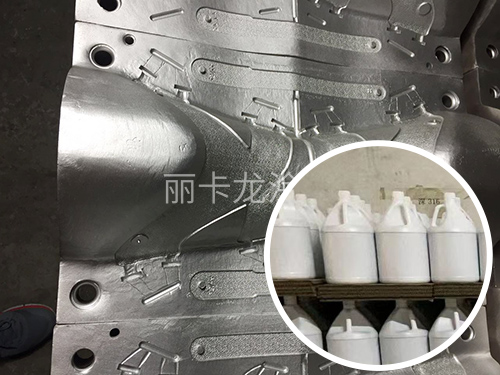
2. Poor pre solution for product workpieces: PTFE coating has high requirements for pre solution of products, and every step cannot be taken lightly or guaranteed. For example, whether there is degreasing and degreasing, whether there is sandblasting, and whether the surface roughness of sandblasting is specified to be 2-3 μ m. Whether this pre solution is well done in the appearance design cannot be seen, but it is easy to show the problem when it can be applied at all times. We often see customers who have only applied it a few times when they choose non stick pans, but the store does not provide returns or exchanges, which is why the problem is exposed.
3. The thickness of the primer and the thickness of the topcoat are harmful: Teflon coating is not necessarily better the thicker it is, and naturally it is not enough to be thin. Its thickness should be controlled. If the primer is sprayed too thick, the organic solvents in the primer will evaporate slowly during the drying process, and not completely evaporate. When applying the topcoat again, during the entire drying and solidification process, the solution of the primer will raise the topcoat, which is called foaming. Sometimes, the bubbles that we cannot see with our eyes are actually fine bubbles, equivalent to separating the topcoat and primer. If the primer is sprayed too thin, because the main component of the primer is to bond the product workpiece to the topcoat, if the primer is too thin, its adhesion will decrease and the topcoat will easily burst. If the topcoat is sprayed too thick, the surface coating cannot flow and the topcoat is not well applied, causing wrinkles in the coating after it dries. With a slight external force, it will burst out.
If it is too thin, the coating will not stick well, and the service life of the non stick pot will be short.
4. Drying temperature and duration: If the temperature is too low, the baking time may be short, and the PTFE coating may not melt, resulting in poor adhesion. From the appearance, the color appears white, the strength is low, and the adhesion is poor. If the temperature is too high, the baking time may be too long, the coating may be dark and dull, and polytetrafluoroethylene has already been carbonized, greatly shortening its service life.
Licaron coatingOne stop solution for PTFE coating
Huaguoshan New District, Xinlian Community, Humen Town, Dongguan City, Guangdong Province, China

 Chinese
 English