Likalong Paint
Likalong Paint
Teflon non-stick coatings are now widely used across various industries. Due to their excellent non-stick properties, corrosion resistance, and heat resistance, they are extensively utilized in the cookware market, holding the vast majority of the market share. However, many customers find that during use, the Teflon coating easily peels off or develops cracks. What is the reason for this?
As the saying goes, "30% depends on the coating, 70% depends on the application." This indicates that the spraying process accounts for the majority of the coating's final performance. Even high-quality coatings will present various problems if the application construction is flawed.
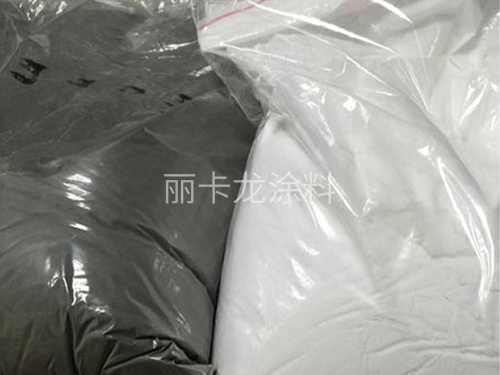
The following poor coating processes can affect the molding effect and service life of the coating:
1. Suitable Substrate (Base Material)
Every coating has specific plasticity and a shrinkage rate. Teflon coatings have a relatively lower shrinkage rate compared to other coatings. Therefore, the raw material of the pot being sprayed requires a corresponding shrinkage rate.
Thermal Expansion: When heated, the pot and the Teflon coating should expand at the same index; when cooled, they should shrink together.
Mismatch: If the shrinkage rates differ, it is like a fat person wearing a thin person's clothes—it is very easy to tear. Microscopically, this manifests as coating cracks.
Material Choice: When selecting a substrate, iron has a relatively large shrinkage rate, while aluminum is more suitable. For consumers choosing non-stick pans, it is recommended to choose aluminum-based non-stick pans.
2. Workpiece Pre-treatment
Teflon coatings have very high requirements for workpiece pre-treatment. Every step must be attended to and executed thoroughly.
Key Steps: Has degreasing been performed? Has sandblasting been done? Sandblasting requires a surface roughness of 2-3μm.
Hidden Defects: Whether this pre-treatment is done well cannot be seen from the appearance, but problems easily arise after a short period of use. We often see customers whose non-stick pans peel after only a few uses, and the merchant refuses returns. Peeling is often caused by this specific issue.
3. Impact of Primer and Topcoat Thickness
Teflon coating is not "the thicker the better," nor is "thinner is better." Its thickness must be controlled.
Primer Too Thick: If the primer is sprayed too thickly, the organic solvents in the primer evaporate slowly during the drying process and are not completely released. When the topcoat is applied, the solvents in the primer will push up the topcoat during solidification, causing bubbling. Sometimes, bubbles invisible to the naked eye are actually micro-bubbles, which effectively isolate the topcoat from the primer.
Primer Too Thin: Since the primer's function is primarily to bond the workpiece and the topcoat, if it is too thin, its adhesion decreases, and the topcoat easily peels off.
Topcoat Too Thick: If the topcoat is sprayed too thickly, the surface coating cannot flow properly (poor leveling), causing the coating to wrinkle after curing. With slight external force, it will peel off.
4. Curing Temperature and Time
Low Temperature / Short Time: If the temperature is too low or the baking time is too short, the PTFE in the coating does not melt. This results in poor bonding, a whitish appearance, low hardness, and poor adhesion.
High Temperature / Long Time: If the temperature is too high or the baking time is too long, the coating becomes dark and dull. The Teflon becomes carbonized, and the service life is greatly reduced.
5. Oven Variations
Every spray coating factory has ovens with a certain degree of deviation. We must understand that the temperature displayed on the oven does not equal the actual temperature.
The Deviation: A deviation of 10-20 degrees is very normal; some customer ovens even have a deviation of 50 degrees.
The Impact: For Teflon baking, this is a critical and potentially fatal factor.
Licaron coatingOne stop solution for PTFE coating
Huaguoshan New District, Xinlian Community, Humen Town, Dongguan City, Guangdong Province, China

 Chinese
 English